Get in touch
Sales Enquiries
+977 9801037556 (Nepal) +44 20 3336 9262 (UK)Career or Job Applications
hello@omegaincorporations.com


What Is Digital Marketing? Strategy Breakdown for Small Businesses
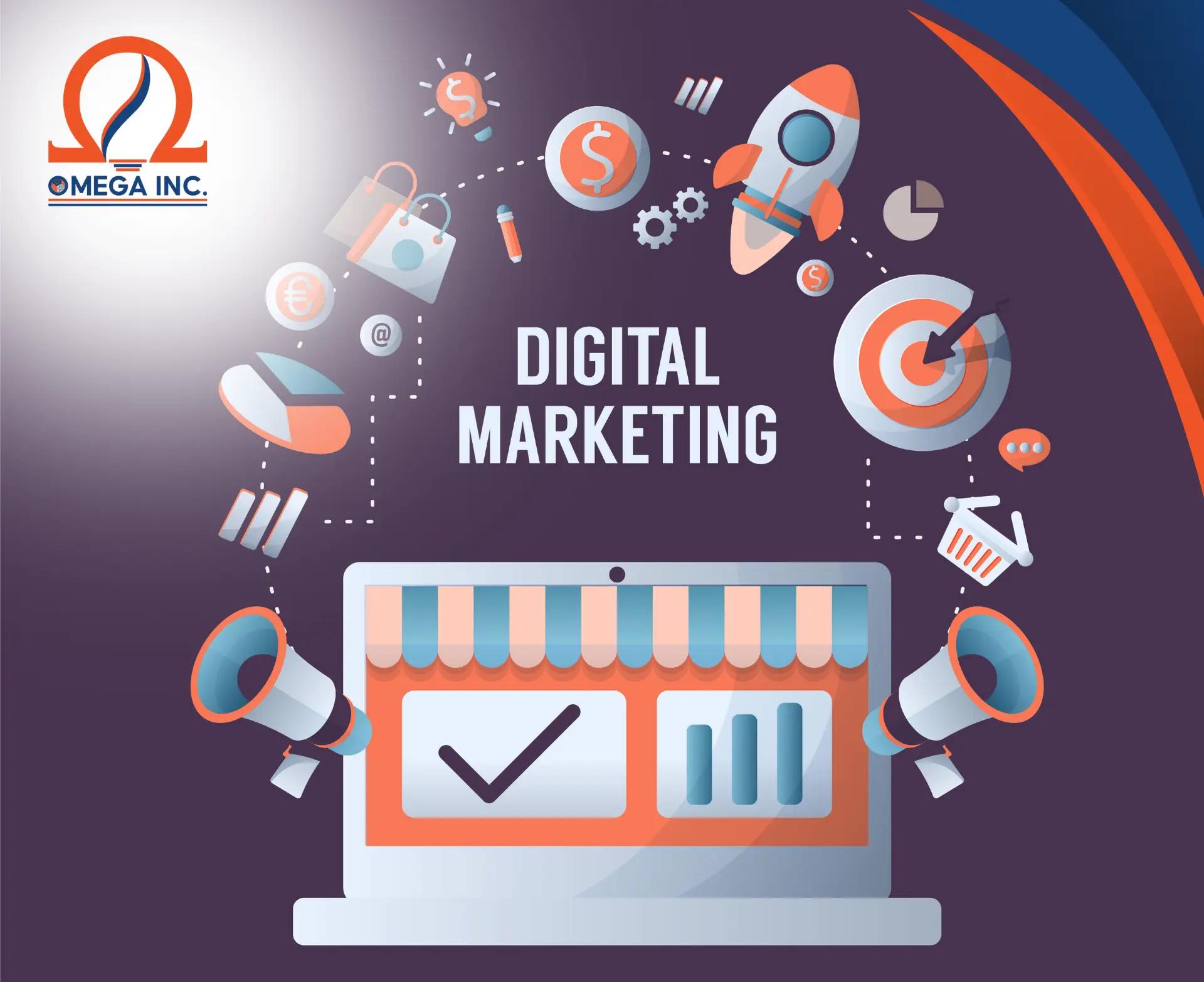
In today’s world, your customers are online searching, scrolling, and connecting every day. Digital marketing is simply the art of meeting them where they already are. For small businesses, that means showing up in search results, being visible on local maps, engaging through social media, and using helpful content to turn interest into lasting relationships.
This guide is designed especially for small business owners who want to understand digital marketing in practical, real-world terms. You’ll learn why a strong online presence matters, which channels work best for small businesses, and how to track what’s really making a difference. We’ll also help you recognise when it’s time to bring in outside expertise, for instance, from a trusted marketing partner like Omega Incorporations, who can help you scale faster and smarter.
By the end of this guide, you’ll have a 90-day starter plan—a clear, actionable roadmap to begin building your online visibility and attracting new customers. To better understand how these strategies come together in real business scenarios, we’ll highlight examples and insights inspired by the proven methods used at Omega Incorporations, a team dedicated to helping small businesses thrive in the digital landscape.
Ready to begin your digital marketing journey? Let’s get started.
Why Digital Marketing Matters for Small Businesses
Consumers no longer wait for ads to come find them. They search, compare, read reviews, and ask friends online first before they buy. For small businesses, that shift creates both risk and opportunity. Risk, because a poor online presence can mean being bypassed. Opportunity, because smart, focused effort yields measurable growth.
These are the reasons that small businesses need to spend on digital marketing today:
Cost-effectiveness: Online media allows you to reach precision. You can target people who already have an interest, hence cutting wastage on spend compared to the majority of offline media.
Measurable results: You can track visits, leads, conversions, and cost per acquisition. That makes it easier to optimise what works and cut out what does not.
Local visibility: Proper local SEO makes small businesses appear on search pages that are most helpful to the customer in the immediate area.
Scalability: Start small and scale spending and resources as needed based on performance.
If you require help creating this plan, see Our Services to find out how Omega helps small businesses with tailored marketing packages.
Chief Components of a Small Business Digital Marketing Strategy
A good small business digital marketing strategy places focus on some high-impact strategies.
The pillars to include and how they map the customer journey:
SEO: Channels long-term organic visibility and traffic. Includes on-page optimisation, technical fixes, and content to answer customer questions.
Content Marketing: Creates credibility and trust. Use blogs, guides, and brief videos to answer FAQs and problems.
Social Media: Creates awareness and community engagement. Choose where your customers live and post regularly.
Paid Media (PPC): Drives results. Use paid search and social advertising to test offers and generate quick leads.
Email Marketing: Builds leads and customers. Automation makes one-time buyers repeat customers.
Website & UX: Your site has to convert. Quick, simple pages with clear calls to action power paid and organic marketing.
Local SEO: Essential for customer-dependent local businesses. Claim and optimise the Google Business Profile and ask for reviews.
Match funnel steps with channels:
Awareness: Social posts, SEO articles, display ads.
Consideration: In-depth content, case studies, and email nurture campaigns.
Conversion: Pay-per-click, offers with clear calls to action, and landing pages.
Retention: Email programs, loyalty offers, useful follow-up content.
Test two or three pillars first. This keeps budgets low and outcomes easier to distribute.
SEO & Content: Build Long-Term Organic Growth
Organic search is a cornerstone. It accumulates compounding returns if you remain disciplined to a strategy.
Start with on-page SEO basics:
Choose keyword terms that match real customer intent. For most small businesses, it will be best to target local keywords.
Optimise title tags and meta descriptions for improved click-throughs.
Use structured data where possible, like local business schema, to assist search engines to understand your products.
Local SEO practices that work:
Claim and verify Google Business Profile. Update hours, photos, and services.
Create uniform citations in local directories. Small differences in address or phone number harm visibility.
Ask customers for reviews and engage with them. Reviews contribute to ranking and conversion.
To begin content marketing, create a simple content plan:
Create pillar pages for main services. Use cluster posts to respond to related long-tail questions.
Answer actual questions customers genuinely have. A well-written, well-researched blog post that answers one real question can generate steady traffic for years.
Take top-performing content and turn it into an email series and short social clips to reach even more people.
A practical small-business mini-blueprint:
Month 1: Website audit, claim local listings, launch two service pages and one pillar blog.
Month 2: Launch three cluster posts, core on-page SEO, and Google Business Profile optimisation.
Month 3: Drive social and email content, track organic traffic and keyword rankings.
Want a step-by-step guide on paid vs. organic trade-offs? You can read our blog post SEO vs PPC in 2025.
Paid Media & Social: Fast Results with Measurable Spend
Rapid purchases of paid media. They enable you to try out offers, audience targets, and creativity in a rush. For smaller businesses, well-executed paid campaigns can provide steady leads day one.
Paid search basics:
Start with the words people search when ready to buy. Align the landing page copy with the ad message.
Use negative keywords to avoid wasted clicks.
Monitor search queries and modify bids and match types as you gain experience.
Best practices in social advertising:
Choose the right platform: For consumer companies, try Facebook and Instagram. For B2B, try LinkedIn.
Utilise simple audience testing: Start with location, age, and interest layers and iterate into lookalike audiences.
Keep creative fresh: Short video or carousel advertisements work better than static images.
Smart budgeting for small businesses:
Begin with a test budget. The average small retail business can afford $300 to $1,000 per month in spend on ad spend to test for product-market fit.
Cost per acquisition tracking and establishing scale on profitability metrics.
Incrementally increase spend on successful campaigns.
Conversion tracking must-haves:
Establish tracking pixels on all ad platforms.
Employ UTM parameters on ad URLs to properly attribute leads.
Test straightforward A/B tests for landing page, headlines, and calls to action.
A three-month paid media test plan:
Month 1: Host search and a single social campaign. Track leads and cost per lead.
Month 2: Optimise top-performing ads. Add remarketing to past website visitors.
Month 3: Scale winners and pause low performers.
For help with landing page alignment with campaigns, go to our 360° Digital Marketing Solution where Omega offers PPC management and landing page optimisation.
Email & Retention: Turning First-Time Buyers into Repeat Shoppers
Getting someone to be a customer can be more expensive than keeping them. A solid retention campaign with the right folks builds lifetime value quickly.
Why retention matters:
Less expensive to acquire: Repeat shoppers buy in larger quantities and at higher frequency.
Higher lifetime value: Email allows frequent contact and tailored offers.
Email workflows every small business should have:
Welcome sequence: Onboard brand values, set expectations, and give a token reward.
Transactional follow-ups: Thank-you emails, order tracking, and satisfaction surveys.
Re-engagement sequences: Win back inactive users with offers or new content.
Regular newsletters: Deliver useful content and include promotions.
Segmentation and personalisation on a budget:
Segment by recent purchase, frequency, and product category.
Personalise subject lines with first names and recommend products based on previous purchases.
Take advantage of basic automation in full email software to start flows without too much manual effort.
Metrics to track:
Open rate, click-through rate, conversion rate, and revenue per recipient.
Unsubscribe tracking to stay relevant.
Blend email with in-store messages to drive conversion to the maximum.
Measurement, Tools & KPIs: How to Know What's Working
If you can't measure it, you can't improve it. A simple but effective analytics setup enables you to focus on what matters most.
Most vital tools:
Google Analytics or GA4 to measure websites.
Google Search Console for search performance and index issues.
Then Google Business Profile insights for local performance.
Platform analytics for ad and social managers for paid campaign metrics.
Eight KPIs to prioritise:
Organic traffic and ranking positions.
Generated leads and lead sources.
Cost per acquisition for paid media.
Return on ad spend for campaigns.
Landing page conversion rate.
Local pack visibility and reviews.
Email open and click rates.
Customer lifetime value.
Reporting cadence:
Weekly checks for running campaigns.
Monthly performance reports on key metrics.
90-day strategic plan to decide channel mix and budget.
Instant list of what to troubleshoot if metrics decline:
Verify that tracking tags are firing as intended.
Check page load time and mobile user experience.
Re-optimise targeting and creatives on pay channels.
Modify offers and landing page relevance.
Outsourcing vs. In-House: When to Bring in an Agency or Build an Offshore Team
Deciding between in-house and outsourcing depends on priorities, budget, and speed.
Ask these questions:
Do you need speed to market or long-term capability building?
Do you have in-house capabilities to execute and measure campaigns?
Can you spend time managing vendors and tracking performance?
Benefits of outsourcing:
Access to experienced design, paid media, and SEO skills.
Faster ramp-up without having to hire full-time.
No monthly fixed charges in most agency setups.
When to use an offshore team:
You need reliable delivery at a lower cost.
You want a dedicated resource that scales with your business.
Data security and compliance are a concern. Don't forget, Omega Incorporations is ISO 27001:2022 certified, which secures client data as you gain offshore scale.
Operations onboarding checklist for outsourcing:
Establish clear objectives and KPIs.
Provide access to necessary accounts and reports.
Establish reporting frequency and communications channels.
Establish a trial period and scaling milestones.
If you're looking at outsourcing, balance your options and read our blog post How to Build a Digital Marketing Funnel to understand how strategy and execution must intersect.
Conclusion: Start Small, Measure, and Scale
Achieving digital marketing success doesn’t require a massive budget or a complicated plan. It starts with setting clear, measurable goals, selecting the right marketing channels, and committing to consistent evaluation. Begin by identifying two or three strategies that align with your business model—perhaps improving your website’s visibility, sharing valuable content, or running a small paid campaign. Test these methods for 90 days, monitor your results closely, and focus on scaling the strategies that bring the strongest returns.
A practical 90-day starter plan can help you stay organised and see early wins. During the first two weeks, conduct a complete audit of your website and local listings, ensuring that your Google Business Profile is fully claimed and optimised. In weeks three to six, launch two meaningful content pieces—such as blog posts or videos—and test one paid advertising campaign to start attracting targeted traffic. Finally, from weeks seven through twelve, implement an email welcome sequence to engage new leads, refine your ad spend, and analyse your results to continuously improve performance.
If you’d like expert support creating or refining your plan, Omega Incorporations offers customised digital marketing packages and offshore team solutions tailored to small business needs. You can also explore our blog for insights and practical advice, such as our post on Web Design vs. Web Development, to deepen your understanding of how different strategies work together.
Remember, growth online is built one step at a time. With focused effort, smart measurement, and a willingness to adapt, your business can achieve sustainable success in the digital space. Start small, stay consistent, and scale what works—because steady progress leads to long-term growth.
Frequently Asked Questions
Budgets vary by industry and goals, but a common approach is to start with a modest test budget for paid media and a small monthly retainer for SEO and content; adjust spend based on measured returns.
If you need immediate leads, start with paid ads and run SEO in parallel for long-term growth; for limited budgets and long sales cycles, focus more on SEO and content.
Paid campaigns can produce leads within days; organic SEO often takes three to six months to show consistent improvements.
Yes, if you have staff with the right skills and time; otherwise, outsourcing to a specialist or building an offshore team offers faster and more predictable results.
Track a small set of KPIs such as lead volume, conversion rate, cost per acquisition, and customer lifetime value, and review them monthly to guide decisions.