Get in touch
Sales Enquiries
+977 9801037556 (Nepal) +44 20 3336 9262 (UK)Career or Job Applications
hello@omegaincorporations.com


How ChatGPT Has Changed Search — And Why AEO Is The New SEO
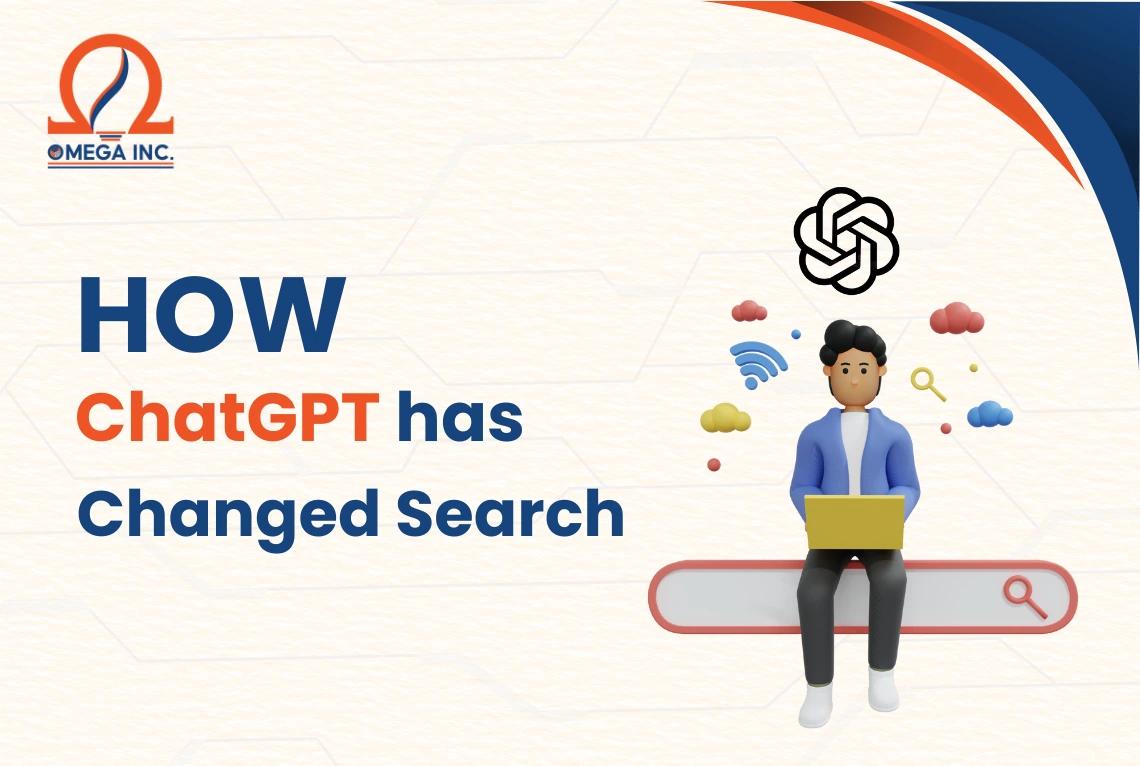
Search is no longer just about finding links. With tools like ChatGPT, Gemini and other AI-powered interfaces delivering direct answers in seconds, user expectations have fundamentally shifted. People now ask full questions, expect context-aware responses, and often get what they need without clicking through to a website at all.
This marks a structural change in search behaviour from ranked lists to answer-first experiences.
In this article, we explain how AI-driven search has changed the way people find information, why Answer Engine Optimisation (AEO) is now essential, and how businesses can adapt their content, technical setup, and measurement to stay visible in an AI-first world.
The Shift In Search Behaviour: From Keywords To Conversations
Traditional search queries were built around short keyword phrases such as:
“best CRM 2026”
Today, users increasingly ask complete, conversational questions, for example:
“What’s an affordable CRM for a remote SaaS team that supports API integrations and two-way email?”
AI models are designed to understand nuance, intent, and constraints, not just keywords. When users receive a clear, accurate answer immediately, they stop scanning search results altogether.
Why Zero-Click Searches Are Increasing
AI systems synthesise information from multiple sources and present a single, authoritative response. In many cases, this removes the need to visit a website at all.
As a result:
More searches end without a click
Pageviews decline, even when visibility increases
Rankings alone no longer reflect real reach or influence
Instead of competing only for clicks, brands must compete to be the cited answer.
What Is AEO And How Does It Differ From Traditional SEO
Answer Engine Optimisation (AEO) is the practice of optimising content so that AI systems and voice assistants can reliably extract and use it as a direct answer.
Traditional SEO focuses on:
Ranking positions in search engine results
Driving organic traffic
Optimising for click-through rates
AEO focuses on:
Being selected as the answer by AI systems
Clear, extractable explanations
Structured, trustworthy content formats
Classic SEO signals such as relevance, technical health, and backlinks still matter. AEO builds on them by prioritising clarity, structure, authority, and machine readability.
How To Write Content For AI Search (AEO Best Practices)
Optimising for AI search is not about writing more content; it’s about writing better-structured answers.
1. Front-Load Direct Answers
Start key pages with a concise 1–2 sentence answer that directly addresses the headline question. This is one of the most effective AEO tactics.
2. Structure For Easy Parsing
Use clear H2 and H3 headings that reflect real questions. Break content into bullet points, numbered steps, and short paragraphs.
3. Optimise For Conversational Queries
Target natural-language questions such as:
“How Does AEO Differ From SEO?”
“How Do I Optimise Content For ChatGPT?”
“What Is AI Search Optimisation?”
4. Strengthen Trust Signals
Add author information, timestamps, internal links, and references to reputable sources. These elements improve perceived authority and reliability.
5. Use Structured Data
Apply relevant schema such as FAQPage, HowTo, and Article to help machines understand which parts of the page contain answers.
6. Maintain Freshness
Review and update content regularly. Including “last reviewed” dates signals accuracy and recency to both users and AI systems.
Technical Foundations For AEO: Schema And Site Structure
Even the best content can be overlooked if it is poorly structured.
Key technical considerations:
Place important answers early in the HTML
Use correct heading hierarchy (H1 → H2 → H3)
Inject JSON-LD schema that accurately reflects visible content
Avoid duplicate or conflicting answers across multiple pages
Maintain fast load times and accessible markup
Measuring Success In The AEO Era
Traditional SEO metrics alone are no longer enough. AEO requires additional indicators of visibility and impact.
Key metrics to track:
AI Citation Presence
Answer Click-Through Rate
Branded Search Growth
Micro-Conversions
Regularly sampling your priority queries in AI tools helps validate whether your content is being referenced.
Organisational Impact: Skills, Processes, And Outsourcing
AEO is not just a content task; it requires operational changes.
Successful teams often need:
Conversational copywriters
Technical schema specialists
Editorial oversight and review cycles
Outsourcing parts of this work can accelerate results where in-house expertise is limited.
Conclusion: How To Get Started With AEO
AI-driven search has changed user expectations from “find a link” to “get the answer. To remain visible, businesses must optimise not only for search engines, but for answer engines.
Three Practical Actions To Take This Week:
Add concise answers to priority pages
Apply relevant schema
Track AI citation behaviour
FAQs
What Is AEO And Why Is It Important?
AEO focuses on optimising content so AI systems select it as the direct answer.
Does AEO Replace SEO?
No. AEO complements SEO by enhancing extractability and trust.
Which Pages Should Be Optimised First?
High-intent service pages, FAQs, and topic hubs.
How Can I Tell If AI Is Using My Content?
Test queries in AI tools and monitor brand signals.