Get in touch
Sales Enquiries
+977 9801037556 (Nepal) +44 20 3336 9262 (UK)Career or Job Applications
hello@omegaincorporations.com


What Does an IT Consultant Do? Role, Benefits, and When to Hire One
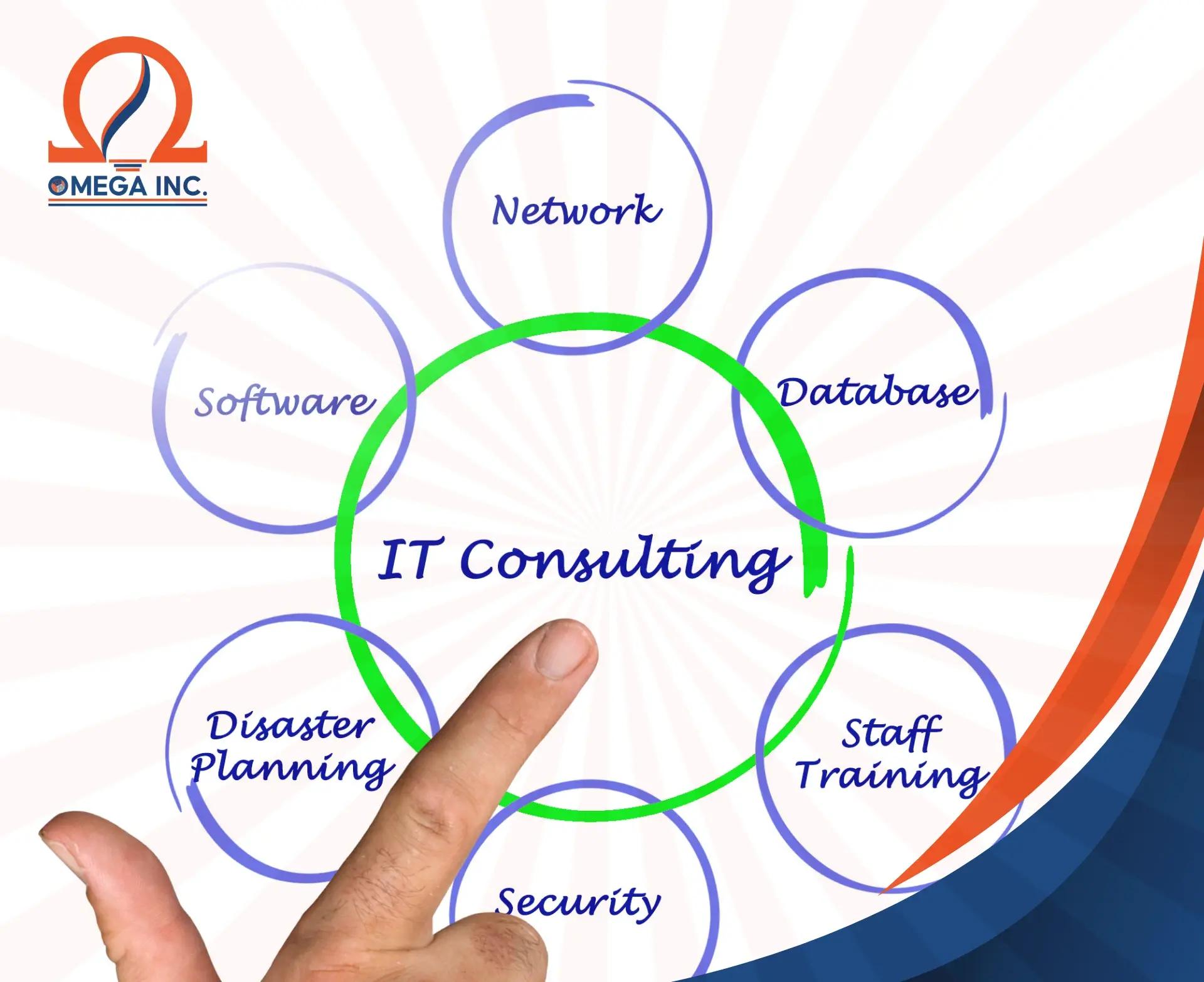
It is more vital than ever to know what an IT consultant does. Technology powers every part of business nowadays, but fewer businesses possess all the expertise they need internally. A good consultant fills gaps, brings fresh perspectives, and helps leaders turn technical decisions into business outcomes.
This article goes in-depth about the work of an IT consultant, how the consultants work, the real benefits which they offer, the signs which prompt you to obtain their service, pricing models, and how to choose the right partner. As we proceed, we will learn why Omega Incorporations is ideal to work for your employees.
What is an IT consultant? Definition, types, and general responsibilities
Simply put, an IT consultant is a technology specialist hired to make technology strategy recommendations and help with the implementation of technology in accordance with business goals. The role is in between technical delivery and business leadership. Consultants translate, strategize, and typically manage implementation.
Key types of Consultants:
Strategy consultants who align technology decisions with business goals and revenues.
Infrastructure and cloud architects who design on-premises or cloud infrastructures and orchestrate migration.
Security professionals who posture teams, design controls, and perform risk assessments for audit and compliance.
Solution consultants and software architects who create system blueprints and integration plans.
Outsourced staff and managed service providers who provide continuous operations and delivery.
Core Responsibilities:
Performing an initial assessment or audit to log current gaps and systems.
To deliver recommendations for an enterprise-tech technology roadmap.
To deliver such outputs as RFP reports, migration plans, or security gap reports.
Shortlisting vendors and negotiating commercial contracts where necessary.
Coordinate implementation and knowledge transfer to your internal teams.
If you'd like to see a demonstration of how outsourced teams are able to extend capability, read our article Software Development Outsourcing Services for more.
How IT consultants operate: process, methodologies, and deliverables
A formal process keeps consulting engagements on track and measurable. The best consultants maintain an open-ended sequence so stakeholders always know what is going on.
Common engagement phases:
Discovery: Capture facts, interview stakeholders, and document current systems.
Assessment: Chart risks, technical debt, and opportunities.
Strategy: Define the plan, set priorities, and align the budget.
Implementation management: Oversee vendors, run sprints, and monitor results.
Handover and training: Hand over systems and train in customer's staff.
Continuous support: Provide managed services where continuous support is needed.
Methodology and Tools commonly used:
Gap analysis and maturity models to chart against current capability.
Business case and ROI modeling to aid investment justification.
Agile and DevOps practices for iterative delivery and feedback cycles in quick time.
RACI charts and SLAs to facilitate transparency of roles and governance.
Deliverables mapped to business objectives:
Quick wins feeding resilience or cost savings within 30 to 90 days.
A 12-month plan for mapping projects to KPIs such as uptime, TCO, or time-to-market.
Detailed technical requirements and acceptance criteria for development teams.
Reports on and recommends vendor selection on contracts.
How consultants work with internal staff:
Set a consistent comms rhythm: weekly standups, steering monthly, quarterly strategy review.
Use clear role definitions so that consultants advise but internal staff run the show.
Align KPIs early and use open dashboards so that everyone can see how progress is going.
This form of structure reduces friction. It also protects institutional knowledge, since a successful handover guarantees your crew will not be left hanging when the contract expires.
Ultimate business benefits of using an IT consultant (cost, speed, and risk mitigation)
Hiring an IT consultant has a variety of advantages far beyond technical solutions. Through being well selected and well directed, consultants enhance delivery velocity and protect value.
Key benefits:
Cost savings: You are able to obtain high-level capability at a percentage of the cost of having full-time senior staff. Consultants allow you to raise or lower capability levels to match need.
Effective delivery: Experienced consultants are up to date. Months' worth of trial-and-error effort is delivered on deadline and more cost-effectively.
Risk reduction: Consultants offer vendor neutrality, proven playbooks, and compliance expertise. This reduces the risk of costly mistakes and audit exposure. Certifications such as ISO 27001:2022 provide measurable trust.
Strategic alignment: Consultants ensure technology roadmaps align directly with business KPIs, from revenue enablement to operational efficiency.
Access to highly specialized expertise: New initiatives like cloud-native architecture, data engineering, or secure CI/CD pipelines will probably require specialists who are not readily going to be recruited otherwise.
When the end result is specified change and measurable value, consultants get you there without redoing the wheel.
When to hire an IT consultant: 10 telltale signs your business needs one
Knowing when to hire an IT consultant can save time and money. Below are ten convenient signs that indicate it is time to hire the services of external experts.
Hiring Triggers:
Stalled projects where deadlines slip and internal teams cannot identify the root cause.
Regular downtime or periodic incidents that indicate root system fault.
Fresh security breach or failed audit that demand immediate attention.
Rapid scaling during growth phases where infrastructure cannot keep pace.
Planned migrations such as cloud or ERP that need rigorous planning and execution.
There is no technology plan and thus money is being spent reactively rather than strategically.
Vendors are overwhelmed in circumstances where you require impartial vendor selection and negotiation.
Compliance timetables such as GDPR, HIPAA, or ISO compliance.
Merger and acquisitions when the systems must be brought into sync quickly and securely.
MVP releases quickly where speed-to-market is paramount.
Short advisory vs. long-term retained support choice:
Use short advisory when you require a health check, strategy, or a plan.
Use retained consulting when you need ongoing guidance, program management, or an offshore blended team.
Use managed services for run-and-maintain daily tasks.
Rapid self-assessment questions
Are you able to trace tech spend back to business outcomes?
Do you have documented recovery plans in place?
Are your staff able to do a mass migration on their own?
And if the answer to any is no, it's time to speak with a consultant. As an easy step of entry, arrange for a discovery session or technical health check with a veteran partner.
IT consulting costs, price structures, and ROI expectations
With information on IT consultant costs, you can buy services wisely. Costs vary widely, but standard models and an easy path to ROI make purchasing smarter.
Standard price models
Hourly or day rates for short diagnostics or advisory.
Fixed-fee engagements for well-scoped, time-boxed activity such as an audit or migration plan.
Retainers for frequent use and ongoing advisory with senior capability.
Outcome-based pricing with remuneration tied to agreed milestones or business outcomes.
Integrated offshore + onshore methodologies with strategy and client-facing work onshore and delivery using offshore cost advantages.
Pricing drivers:
Complexity and nature of activity.
Expertise and seniority of consultants.
Security and compliance requirements.
Duration and urgency of engagement.
Typical cost advice (representative figures):
Short advisory: day rates.
Fixed project: small audit several thousand dollars; large migration tens of thousands or more.
Retainers: monthly fees for level of service and response time.
How to calculate ROI:
Define benefits: cost saving, revenue growth, productivity improvement, and risk avoidance.
Estimate each benefit's dollar value.
Use a simple ROI formula: (Net Benefit - Cost) / Cost.
Procurement tips:
Phase large projects to control risk and validate value in advance.
Set up measures of success upfront.
Make SLAs and acceptance criteria contractual.
Use pilot projects as demonstration of technique.
If you require a personalized cost estimate, our cost team provides personalized quotations according to your scope and compliance needs. Explore Our Services
How to choose the right IT consultant or IT consulting firm
Choosing partners matters. A good consultant possesses technical knowledge, industry insight, good communication skills, and proper delivery methods.
Criteria for selection:
Industry experience and relevant case history.
Referrals from clients with comparable issues.
Security and compliance credentials such as ISO 27001:2022.
Interpersonal style and cultural alignment, specifically over timezones.
Clear methodology for discovery, delivery, and handover.
Discovery questions to ask:
What style will you use in order to take us there?
Can you share relevant case studies with measurable outcomes?
How will you interact with our team and impart knowledge?
What are the proposed measures of success and KPIs?
How do you handle IP and data ownership?
Why hybrid onshore-offshore models win:
Local leadership onshore facilitates local communication and rapid alignment with stakeholders.
Offshore teams offer low-cost, high-quality delivery.
Hybrid models combine both strengths, delivering quality, continuity, and value.
If partners are your line of thinking, compare proposals on a common matrix and consider doing a small pilot. As a real-life vendor selection and outsourcing readiness guide, read corresponding blog entries like In House vs Outsourcing.
Why use Omega Incorporations for IT consultancy and outsourcing
Omega Incorporations integrates strategy, security, and delivery. We are pragmatic and bespoke in approach, as per your commercial requirements.
What sets Omega apart:
We are a global outsourcing organization offering web development, internet marketing, and IT advisory.
We are ISO 27001:2022 certified, indicating we care about data security.
We offer end-to-end onshore-offshore resources with commercial acumen and also delivery capability.
Our solutions range from technical audits and strategic roadmaps to managed security operations and full-stack delivery teams.
Example engagement types
Short remediation projects with technical health checks.
Phased delivery with 12-month full roadmaps.
Embedded offshore development teams which work exclusively for you.
Managed security and compliance programs.
If you'd prefer to see our process in action, request a custom IT consulting proposal.
Conclusion
A great answer to what an IT consultant does will show both breadth and depth. Consultants take the measurement of where you are now, chart where you need to go next, and help get you there safely and effectively. Call them in when projects are bogged down, when risk is escalating, or when strategic focus is fuzzy. Consultants provide quicker results while providing authentic ROI for most companies.
Take two actionable next steps:
Do a rapid self-review against this article's checklist to uncover short-term pain points.
Book a discovery call with Omega Incorporations for a tailored technical health check.
If you are interested in seeing how seasoned consultants can cause your business to be at the forefront, contact us.
Frequently Asked Questions
1. What exactly does an IT consultant do?
An IT consultant assesses your technology, proposes a plan that ties to business goals, and helps oversee implementation and handover to internal teams.
2. How much does an IT consultant cost?
Costs vary by scope, seniority, and duration. Options include hourly rates, fixed projects, retainers, and outcome-based models. Get a custom quote for precise figures.
3. How long does an IT consulting engagement usually take?
Engagements range from a few weeks for audits to several months for migrations or roadmaps. Phased approaches help deliver value quickly.
4. Are IT consultants only for large companies?
No. Small and mid-sized businesses gain particularly high value from consultants because they can access senior skills without long-term hiring commitments.
5. What is the difference between an IT consultant and an MSP?
An IT consultant focuses on strategic advice and project delivery, while a managed service provider (MSP) provides ongoing operations and support. Many firms offer both services depending on needs.